Please note: this story was provided by the author and published as is.
I have started writing this post three times now, and every version sounds insane.
Maybe that is because it is insane. Maybe because even now, years later, part of me still wants to believe there is some ordinary explanation I missed. A prank. A mix-up. Some elaborate joke that got too far out of hand.
But my daughter is seventeen now, and I still have the photographs.
So I am putting this here because I do not know what else to do with it anymore. Maybe I am hoping somebody reading this has seen something like it before. Maybe I just need to get it out of my head and into a place where other people can look at it and tell me whether I am as crazy as this sounds.
Either way, I have to start at the beginning.
The envelope arrived three days after Cora’s seventh birthday.
It came in the regular mail, buried between a grocery flyer, a property tax reminder, and a glossy postcard from a dentist office we had never visited. It was thick and cream-colored, with my name written across the front in neat black script that looked almost formal. Not printed. Handwritten.



I remember standing at the kitchen counter turning it over in my hands, trying to place it. No return address. No stamp I recognized. Just my name.
For one harmless second, I thought it might be from my mother. She still mailed things the way people used to, birthday cards with money tucked inside, newspaper clippings about weather, recipes nobody asked for. She had brought an old disposable camera to Cora’s party and spent the afternoon snapping pictures with the confidence of someone who trusted film more than phones.
So I smiled.
I opened it at the counter while my wife was upstairs helping Cora rinse chlorine and grass out of her hair after going to the community pool.
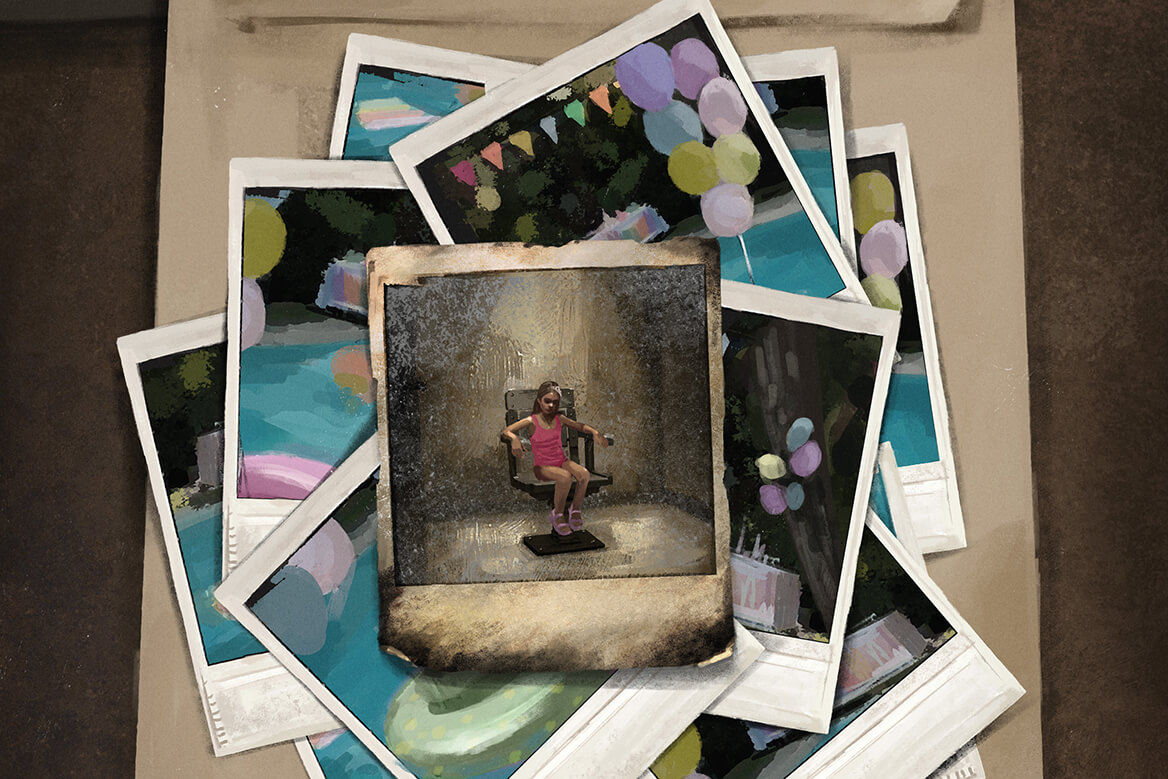
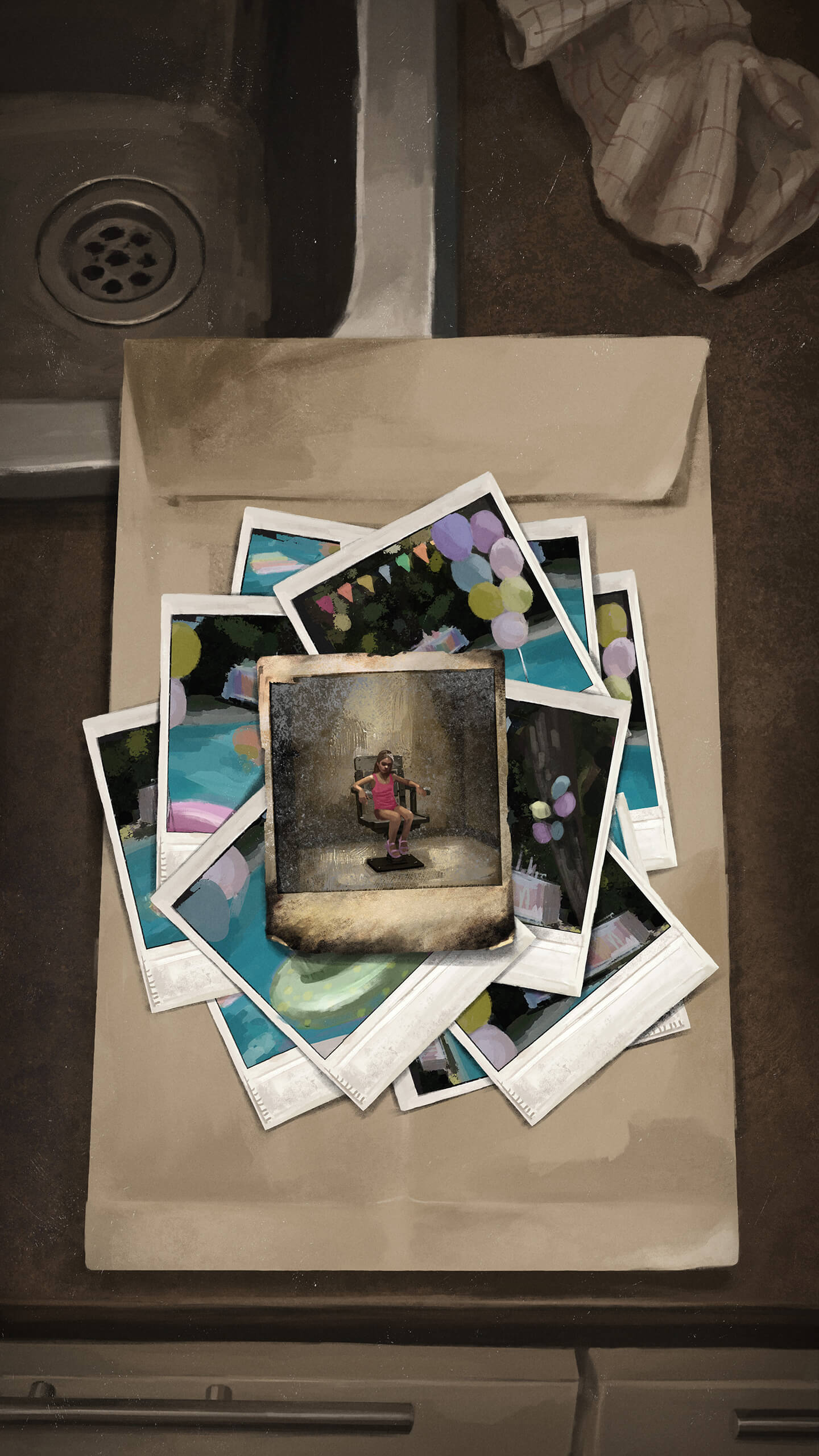
Inside was a stack of glossy photographs.
At first, nothing about them seemed wrong. I spread them across the counter and found the whole afternoon there in pieces.
Cora in the backyard with pink icing at the corner of her mouth.
Cora on the grass with her presents open around her.
Cora in her pink swimsuit and plastic silver crown, tearing through the sprinkler in a burst of late sunlight.
Cora grinning with both front teeth missing.
Cora on my brother’s shoulders, arms out like she was flying.
The kind of pictures parents hold a little too long before setting them down. The kind that make you stop and think, there she is. There goes my whole heart walking around outside my body.
There were twelve photos in the packet.
I counted them twice because something in me had already started to tighten, though I could not have said why.
The first eleven belonged.
The twelfth did not.
It was still Cora. Same pink swimsuit. Same crown tilted slightly off-center. Same warm birthday light on her skin.
But she was not in our backyard. Instead, she was standing in front of a stained concrete wall.
Not outside. Not anywhere I recognized. No fence behind her. No grass. No folding table covered in wrapping paper and paper plates. No hydrangea bushes by the gate.
Just that yellow-gray wall and a metal chair bolted to the floor a few feet to her left.
Cora was turned halfway towards the camera, smiling a little, as if someone she trusted had asked her to stand still.
I stared at that photograph long enough for the whole kitchen to go quiet around me.
Then I laughed.
Not because it was funny. Because sometimes your brain throws a laugh at something horrifying while it scrambles for a better explanation.
I turned the photo over.
The back was blank. No date. No print shop logo. No note. Same smooth white paper as the others.
I checked the rest again. Backyard. Sprinkler. Cake. Balloons. Family.
Then that one.
Concrete wall. Metal chair. My daughter.
I called my mother. She said she had not mailed anything and had not developed the camera yet. She had not even taken it to the store.
When I asked if anyone else at the party had been taking photos, she said probably, everybody had phones out all afternoon, and then she asked why I sounded strange.
I told her I was tired. That was true, it just was not the whole truth.
Cora was in the living room at the time, kneeling on the rug and arranging her presents into careful little groups. Craft kit. Stuffed rabbit. Plastic jewelry. New sandals. Humming to herself under her breath, perfectly content, perfectly safe, maybe ten feet away from me.
I looked at the photo again and felt a chill go down my back so fast and sharp it almost hurt.
Because that was my daughter.
And somewhere, somehow, someone had taken her picture in a room she had never been in.
That night, after Cora was asleep, I showed the packet to my wife.
She did exactly what any sane person would do. She looked for the logical answer first. Somebody had edited it. Somebody was messing with us. Somebody at the party had taken a candid shot and done something sick with it later.
That would have been bad enough. What made it worse was that even then, before the photo started changing, some primitive part of me already knew none of those explanations were going to hold.
Because my wife saw it too. I was not alone in that first wrong moment.
We stayed up too late running through every possible explanation we could think of. Maybe it was AI. Maybe it was a prank by a teenager. Maybe it was targeted. Maybe it was random. Maybe it was harmless.
Neither of us believed that last one.
The next day, I put the photographs back in the envelope and shoved them into the junk drawer beneath old batteries, menus, tape, and loose birthday candles. I told myself I was done with them. I had a child to feed, laundry to fold, dishes to unload, real life to keep moving.
But around three that afternoon, while Cora colored sea animals at the dining room table, I opened the drawer again.
I still do not know whether I was checking to prove to myself that nothing had changed, or because part of me already knew it had.
The extra photo was different.
Created by: Danny Ingrassia
Not different in a vague, slippery way. No, it was completely different.
In the first version, Cora had been standing near the chair. But in the second, she was sitting in it.
Her legs hung just above the floor. Her knees were still smudged with grass stains from the party. One sandal had slipped halfway off her heel. Her little silver crown was still on her head, crooked now, as if someone had touched it.
She was facing the camera directly.
She did not look scared.
She looked calm.
I think that was the part that made my stomach turn over. No fear. No panic. Just trust. My baby girl sitting where she had been placed, waiting patiently for what came next.
That was the point where I stopped trusting my own eyes enough to leave it at that.
I took out my phone and snapped a picture of the photograph right there on the kitchen table. Then I took another. I remember checking them both before I locked my screen, because by then I already felt ridiculous, and I wanted proof that this had looked the way I thought it had looked.
I do not remember sitting down, but I know I did, because the next thing I remember is looking up from the picture and seeing Cora at the table, humming softly as she shaded a whale blue.
Safe. Right there.
I asked whether she had ever seen a room with a concrete wall and a metal chair. She looked at me like I was speaking another language. I pushed a little, asked if anybody at the party had shown her anything strange, if anyone besides Grandma had taken her picture, if she had talked to anyone she did not know.
What I got back were shrugs and maybes.
Kids live in a world of maybes. That is part of what makes them terrifying to question after the fact.
The third version of the photo was waiting for me the next morning.
I found it on the kitchen counter. It wasn’t in the drawer where I had left it. Or in the envelope that I know I had placed it back in. No, it was on the counter by itself.
The first thing I did was grab my phone. But, he pictures were gone.
Not blurry or corrupt. The were completely missing. I checked my camera roll and the deleted folder. But they weren’t there.
Just two empty spaces in the timeline between Cora’s birthday cake and a screenshot of the weather from later that night, like whatever had been there had been lifted cleanly out of my phone. I looked back to the stack on the counter.
In the latest version, Cora was no longer sitting in the chair. She was standing several feet behind it, farther from the camera. And there was something new in the background.
A black rectangle. No, not just a rectangle, it was a doorway, or at least the shape of one. An opening in the wall where no opening had been before.
It was impossible to tell whether it led anywhere or was only darkness painted flat across concrete. But the longer I looked at it, the more certain I became that it was open.
And worse than that, I could feel something inside looking at me while I stared at the snapshot.
My wife saw that version too. She asked the same questions I had already been asking myself. Had I moved it? Had Cora gotten into the drawer? Had someone been inside the house?
We both knew what the real question was.
If Cora had not moved it, someone else had.
That morning I checked every window and door latch in the house. Then I checked them again. I
searched the backyard, the garage, the crawl space beneath the hall closet, the side yard, the space behind the shed, even the trash bins at the curb.
I found nothing. No footprints. No signs of entry. Not even disturbed dirt. The fence line was intact. The locks were secure.
The cameras we had not yet installed suddenly felt like a decision we had waited too long to make.
I took the photos to the police that afternoon.
I nearly turned around twice on the way there. That is how embarrassed I felt. That is how impossible it sounded when arranged into normal words.
Someone mailed me photos of my daughter. No, she was not missing. No, I did not know who sent them. Yes, I am telling you, one of the photos appeared to be changing.
The officer at the front desk was polite. Patient, even. He looked through the packet, nodded at the right times, asked where and when the birthday party had been, whether anyone suspicious had attended, whether Cora had said anything unusual since.
I could tell from his face that he believed two things at once. One, that I was genuinely frightened.
Two, that the photographs themselves were not proof of anything.
He suggested digital manipulation. Suggested cruel jokes. Then he handed the photos back across the counter and told me to keep my doors locked.
I left feeling worse, because I had wanted someone else to take one look at the photo and feel what I felt. That awful instant certainty. Not a prank. Not harmless. Something wrong in a way that did not belong to ordinary life.
That night, while I was putting Cora to bed, she asked why I kept staring at her.
I smiled and brushed her hair back from her forehead, buying myself a second. The truth was, I had been watching her all day like if I looked away for too long, something might happen in the space between one glance and the next. That was the part I could not make peace with. She had been home. With us. With me. I could account for every minute of her day, every snack, every cartoon, every trip to the bathroom, every small ordinary movement that should have added up to safety. And still there was that photograph.
So I kissed her forehead and told her dads get weird sometimes.
She accepted that easily. Rolled onto her side. Still smelled faintly like strawberry shampoo.
I stood there longer than I should have, one hand on the bedrail, staring at her in the glow of the night-light and feeling something I had never felt before in my own house.
Not fear exactly. No, this was much worse.
Failure.
Because she was right there. My baby was right there. And I still did not know what I was supposed to be protecting her from.
When I came downstairs, the extra photo was on top of the stack again.
I know I had put it in the middle. But somehow it was on top now.
This fourth version was worse.
Cora was closer to the black doorway. Not a lot closer, maybe a couple steps, but enough that I could feel it. The chair was off to the side now. The dark behind her looked heavier somehow. Closer.
And on the floor by her foot was her silver birthday crown.
It wasn’t on her head anymore.
And it was Cracked with one point bent in.
I do not know why I ran upstairs. I just did.
I hit my shoulder on the banister hard enough to feel it later, shoved her door open, and woke her up before I even got to the bed. She started crying right away, and then I was standing there feeling like an asshole, grabbing for her, telling her it was okay, that Dad was sorry, that I was sorry, while my wife came running in asking what happened.
Cora was warm. Half asleep and confused but she was safe. I held her longer than I needed to.
Then I went back downstairs.
I rounded the corner into the kitchen and something caught the light.
The silver crown was in the trash.
Just sitting there.
Cracked, with the same bent point.
I stood there staring at it like my brain had just stalled out.
I did not throw it away. I know I did not.
My wife started trying to explain it. Maybe one of us had tossed it after the party. Maybe it got stepped on. Maybe it broke and we forgot.
But none of that made sense. The party had been days ago and the trash had already been taken out.
Neither of us said anything for a second after that.
She was still standing there in the kitchen doorway, one hand braced against the frame, watching me in that careful way people do when they think you might be one wrong word away from coming apart.
I think that was the moment it really hit me that she was scared too. Not just unsettled, no she was scared.
And somehow that made me feel even worse.
Because I was supposed to be the one telling her it was nothing. The one checking the locks and shrugging it off and making the whole thing smaller. Instead I was standing there in my own kitchen, reaching into the trash for my daughter’s broken birthday crown like it was evidence.
I took it out and set it on the table next to the photo.
Then I yanked the whole trash bag out of the can and carried it straight to the curb in my bare feet, still in yesterday’s T-shirt, heart pounding hard enough to make me feel sick.
When I came back in, I checked every door again. Front door, back door, side door to the garage. I checked the windows and the gate latch. I do not know what I thought I was checking for. I only knew I needed to be moving.
After that I sat down at the kitchen table with the photo and the crown in front of me.
My wife told me twice to come to bed. I told her I would in a minute, but I didn’t.
I sat there half the night staring at the photo, then at the crown, then at the back door, like if I stayed awake long enough, I might catch the moment the world stopped making sense.
I do not remember falling asleep right there at the table. I do remember the feeling when I opened my eyes the next morning and saw the envelope still sitting right where I left it. I stood up and placed it back in the junk drawer, this habit was too familiar by now.
That morning, Cora said something that changed everything.
She was sitting at the kitchen table with a bowl of cereal, still half asleep, hair smashed flat on one side from bed. I was making coffee and watching her the way I had started watching her constantly by then, like if I kept her close enough, watched hard enough, I could somehow keep her safe.
She looked toward the junk drawer and then toward me. And said, casually, “The room is closer now.”
I turned so fast I sloshed coffee onto my hand.
I asked what room. She pointed at the drawer and told me, matter-of-factly, that she meant the room in the picture.
My skin went cold.
I had not shown her the changed versions. I knew I had not. After the first day, I had been obsessive about hiding it from her.
So I asked who had shown it to her.
She shrugged as if she didn’t know.
I pushed a little more, did she see it in the drawer?
A small nod.
When?
Just a small shift of her shoulders.
My heart was beating so hard it made me feel sick.
Then I asked what room she meant, and she said, in that same calm little voice, “The room where the lady takes my picture.”
By then my wife was standing in the doorway.
We both went still.
What followed is still one of the worst conversations of my life, and even now I can only tell it in pieces, because that is how it came out of her.
There was a birthday lady in a flowered dress. She told Cora she was special because she was brave. She promised her one more birthday surprise. She showed her where birthday pictures go. She took her through a black door by the fence.
The thing was that there was never a black door by our fence. But Cora insisted there was.
By that point we were pushing too hard and too fast, and she started crying for real.
After that, everything came out in scraps. The lady smelled like flowers and she had cold hands. The room had no windows. Sometimes there was one picture. Sometimes more. And the lady always told her to smile because Mommy and Daddy wanted to see how brave she was.
Then I asked the question I had been trying not to ask.
How many times had this happened?
Cora rubbed her eyes and said, “Only when the picture changes.” That was the moment my fear shifted into something worse.
Because panic burns hot and fast.
But this was cold. Cold and deliberate.
Like realizing something had been opening a door into your house for days, and you had been standing too far away to hear the latch lift.
We called the police again, and this time they came to the house.
Two officers, then a detective.
They searched the yard, the fence line, the gate, the shed, the crawl space, the attic access, even the neighboring lot. Then they sat us down and asked us to go back through every adult who had been at the party.
We could not give them anything useful.
There had been too many people coming and going. Parents, cousins, neighbors. Kids soaked from the sprinkler. Adults juggling drinks, folding chairs, paper plates. The kind of backyard birthday where the whole thing blurs at the edges if you try to replay it later.
It was easy to imagine someone slipping into the background of a day like that.
One of the officers asked Cora to describe the room.
She said it smelled wet.
When he asked if there was anything else in it besides the chair, she shook her head, thought about it for a second, then said, “Sometimes there are sounds behind the wall.” Nobody said anything after that.
The detective took the packet.
I watched him slide all twelve photos into an evidence envelope right there in my kitchen, seal it, and carry it out of my house.
I should have felt better when he did.
I didn’t.
The next morning, the packet was back in the junk drawer.
For a few seconds I just stood there staring at it.
I told myself the police must have dropped it off without knocking. That I had missed a call. That maybe my wife had brought it in and forgotten to mention it.
None of those explanations felt right, but they were still better than the alternative.
So I called the detective.
He told me the packet was still logged in evidence.
Whatever he had at the station, another copy was sitting in my junk drawer.
If you are still reading at this point, this is probably where you stop believing me.
I get it. I would probably stop too. But I do not know how to make it sound any more reasonable than it was.
That night, after everyone had gone and the house was finally quiet again, I stood at the sink and looked out into the backyard. When the motion light clicked on, I thought for one horrible second that I saw something by the fence. Tall. Still. Waiting. I dropped the dish in my hand hard enough to crack it against the sink, but when I looked again it was only the fence post with the rake leaning against it.
Fear does that to you. It furnishes the world. You stop seeing what is there and start seeing what could be there.
We installed cameras the next morning. One facing the backyard. One on the side gate. One in the hallway outside Cora’s room. One in the kitchen.
I still do not know why we had not done it sooner. That is not true, actually. I know exactly why. Because cameras were for other people. For break-ins. For packages going missing. For the kinds of things that happened to somebody else, not to a little girl asleep in the next room while her parents stood in the kitchen pretending they still understood the rules of their own house.
My wife wanted one in Cora’s bedroom too. I said no at first. Then yes.
For the next four nights I barely slept. I sat upright in bed with the monitor beside me, watching timestamps crawl forward in the dark. 1:13. 2:41. 3:08.
But nothing happened. No one came. There was no black door by the fence or woman in a flowered dress. The footage was clean. The house stayed stubbornly, offensively ordinary.
And still the photo changed.
Version five showed Cora standing at the threshold of the black doorway. Not inside, just at the edge, as if she had been turned gently by the shoulders and lined up there.
Her face was different in that one.
Not frightened but not calm either.
It was just blank.
A look I had never seen on her in real life. A look like she was listening. As if something beyond the frame were speaking softly, and she was trying to hear it.
I locked myself in the bathroom to be sick.
When I came out, my wife was standing in the hallway holding the picture with both hands, staring at it like she wanted to tear it in half and knew it would not matter.
She looked at me with tears in her eyes and asked if we should try to burn it.
We tried the backyard grill first, then the fireplace.
The glossy paper blackened at the edges, curled, smoked, but refused to catch properly. The surface blistered, but the image underneath remained stubbornly visible, Cora still standing in that doorway, unharmed by flame.
The next morning, the extra photograph was back in the envelope.
Perfect again. Not even singed.
There are moments when the mind simply steps back and that was one of them.
I could feel mine retreating from the facts, because the facts no longer obeyed anything I knew about the world.
Later that afternoon, I was in the laundry room when I heard Cora laughing in the backyard.
Just a little burst of it.
Bright. Familiar. Normal.
I ran outside so fast I left the wet towels on the floor.
She was standing near the back fence in bare feet, head tilted up, smiling at nothing.
I asked who she was talking to.
She said no one.
But there was a pause before she said it. Tiny. Barely there.
Children lying should not be that frightening.
I took her hand and brought her inside.
That night, when I was tucking her in, she asked if the lady was mad at me.
I asked what lady.
She looked at me with those tired, heavy-lidded eyes and said, “You know.” Then she rolled over and went to sleep.
By the sixth day, even the detective sounded rattled.
He told me the evidence packet was still sealed, still logged, still impossible to have left the station.
I asked him to check anyway.
He put me on hold.
When he came back, he said the packet was still there, bagged and tagged. Then he hesitated long enough that I felt my stomach drop.
The officers who logged the photos had marked twelve.
Now there were eleven.
He said maybe someone had miscounted.
Maybe. Always maybe.
I asked if they had dusted them. They had. Only our prints. Mine, my wife’s, a few smudges from Cora. No unknowns. No evidence of a sender. No shop markings. No traceable stock.
Nothing.
That evening, just after sunset, the hallway camera caught something.
Not a person, exactly.
At 7:42, while Cora sat at the kitchen table doing homework and I stood beside her peeling carrots for dinner, the hallway feed glitched for less than a second. Just a white flare across the frame. A burst of brightness, like a flash, and then it was normal again.
My wife replayed it frame by frame.
There was one image between the flare and the return to normal.
A dark vertical shape at the far end of the hall.
Too tall.
Too narrow.
Like a doorway where no doorway belonged.
We checked the actual hallway.
There was nothing there.
I had left the packet on the kitchen table, too afraid to put it away again. When we came back into the kitchen, the latest version of the photograph was gone.
It was in Cora’s backpack.
Tucked into the front pocket with her crayons and spelling folder.
In this one, she was inside the doorway.
Only her left side was still visible. One hand on the concrete wall. The rest of her was swallowed by black.
That was the first time I really understood that we were not watching something happen.
We were losing ground.
Piece by piece.
Frame by frame.
Photo by photo.
We did not sleep in our room that night.
We dragged Cora’s mattress into the living room and left every light on in the house. My wife sat awake with a baseball bat she would have been embarrassed to explain to anyone. I held Cora against my chest every time she shifted in her sleep.
Sometime around three in the morning, she started to murmur.
Not dream-talking.
Answering.
Soft little yeses and noes to someone we could not hear.
At 3:14, all four cameras in the house cut to static at once.
The screens went gray. The sound hissed.
And from somewhere in the house, close enough that I felt it in my teeth before I fully heard it, came the sharp, unmistakable sound of a camera shutter.
Click.
Cora sat straight up in my arms.
Her eyes were open, but I do not think she was awake.
She looked toward the darkened hallway and whispered, “No.” Then, louder this time, trembling now, “No, I said no this time.” The static cleared.
The cameras came back.
Nothing was in the hallway. Nothing in the kitchen. Nothing outside by the fence.
But on the coffee table, where there had been nothing a second earlier, lay a fresh glossy photograph, still curled slightly at the edges like it had only just been printed.
My hands shook so hard I could barely pick it up.
In it, Cora was turned toward the camera, deep inside the concrete room.
And behind her, finally visible in full, stood the woman in the flowered dress.
Not beautiful. Not kind. Not even human.
Her face was pale and stretched strangely, too smooth where it should have had features, too blurred around the mouth. Her hands rested lightly on Cora’s shoulders. Her fingers were too long.
And behind them both, beyond the metal chair, the black doorway stood open into a deeper darkness crowded with smaller shapes waiting just out of sight.
Cora began screaming the moment I saw it.
Not because she had seen the photo.
Because she was looking at the hallway.
At empty air.
Screaming like she could see the woman standing there.
We moved out the next morning. Not after making a plan, not after talking it through, just the next morning. We threw clothes, medications, Cora’s rabbit, and whatever else we could grab into trash bags while my wife called her brother and asked if we could stay with them for a while.
We did not take the packet.
I left it on the kitchen counter because I wanted it out of my car, out of my hands, out of my life. Some part of me honestly believed that if we got far enough away from that house, if we left the thing behind like it belonged there and not with us, it might finally stop.
It didn’t.
That night, when I went into the guest room to unpack Cora’s pajamas, the packet was waiting on the dresser. Same cream envelope. Same black script. Same soft crease at one corner.
This is the part my wife still will not let me talk about for too long.
She says there is no point in going back over it because nothing good has ever come from looking at those pictures harder.
She is probably right.
But if you have made it this far, you already know why we kept looking anyway.
I just stood there staring at it.
When I finally opened it, there were eleven normal birthday photos and one extra.
In that one, Cora was back in our backyard, standing by the fence in the afternoon sun. She looked safe. Whole. Smiling. The black doorway was gone. The woman was gone. At first glance, it was almost a relief.
Then I saw her hand.
Her right hand was lifted slightly away from her side, like she was reaching for someone, or someone just outside the frame was holding it.
We moved again six months later, and then again the year after that.
It did not seem to matter where we went. Sometimes I would find the envelope tucked somewhere it did not belong, as if it had simply settled there on its own. In a box of winter scarves. In a bathroom drawer. Between school papers.
Always twelve photos.
Always one extra.
Cora is seventeen now, and she remembers almost none of it. A woman in a flowered dress. A room that smelled wet. A game involving pictures. That is all she has left.
Mostly she is a normal teenager now. Sarcastic. Dramatic. Always hungry. Impossible to wake up for school. Beautiful in that careless, infuriating way children become before you are ready for it.
Sometimes I let myself believe it is over.
Time can do that. It smooths the edges. It takes something that once felt impossible and files it down into something survivable, something you can almost convince yourself belongs to the past.
Then last month, while I was organizing old school portraits for a graduation slideshow, I found a photograph I had never seen before.
It was not in the envelope.
It was loose, mixed in with orchestra pictures, dentist receipts, and one of those awful laserbackground school portraits from fifth grade.
Cora was older in this one. Eighteen or nineteen, maybe.
She was standing in the concrete room again.
There was no chair this time. Just the wall. The black doorway. And Cora, older now, one hand resting on the edge of the opening.
She was looking straight into the camera.
Not frightened.
Not blank.
Knowing.
As if she understood something I did not. As if she had been there so many times that fear was no longer the right word for it.
And at the bottom of the photo, written in that same neat black script, were four words.
One more, then mine.