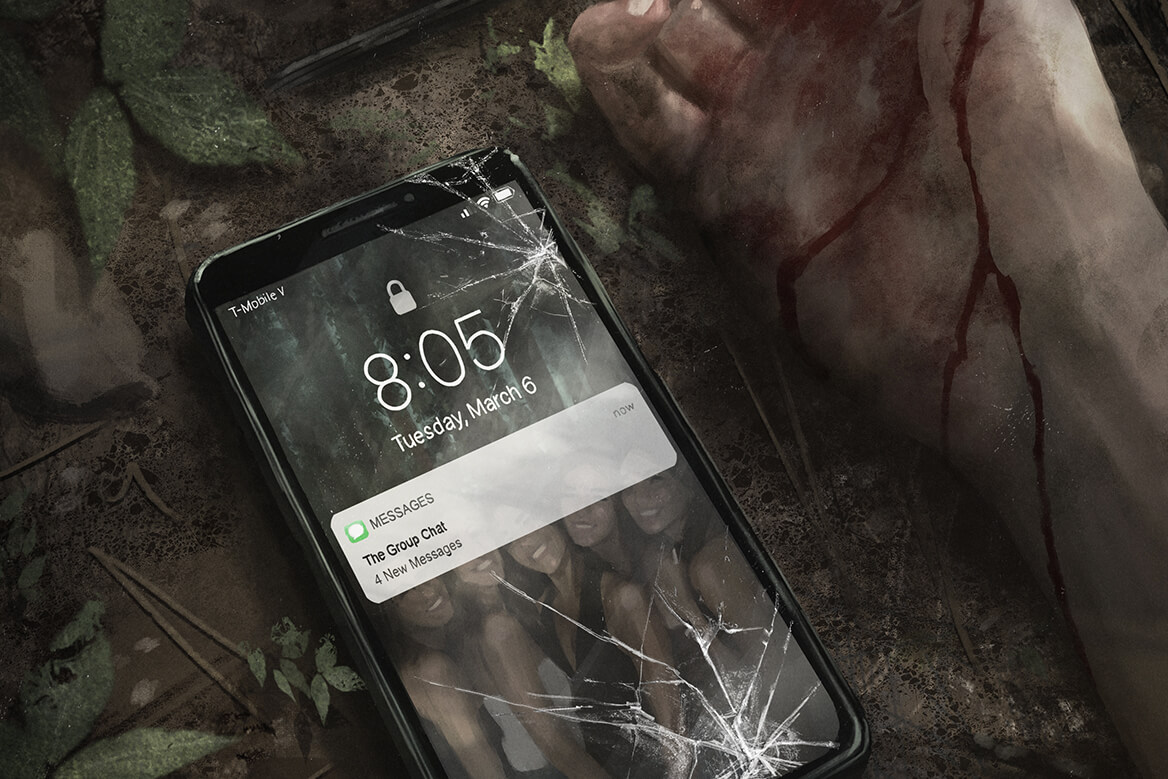
Please note: this story was provided by the author and published as is.
I have started this three times and deleted it every time the story gets too close to making me look exactly as bad as I probably am.
I know what kind of a woman people think they are reading about when they see words like group chat and dead friend and I just had a bad feeling. They picture somebody unstable. Lonely. Dramatic in a way that makes all her instincts look like performance.
I am lonely. But lonely people notice things.
It started Tuesday night at 10:15 p.m. I know because I took screenshots before I even understood what I was looking at, which might say something unflattering about me. A better person might have felt scared first. I felt alert.
Like I had just been handed something important.
I was in bed half watching television, half scrolling, doing that pathetic little loop people do when they do not want to sleep because tomorrow holds nothing but work, fluorescent light, and the continued fact of being themselves. My apartment was hot in that stale radiator way that makes the air feel thick and used. Somewhere downstairs a dryer was thumping. I had one lamp on, one sock off, and a glass of grocery-store pinot on the nightstand because lately I have become exactly the kind of divorced woman I used to think I would never be.



I had poured the second glass without noticing when my phone buzzed.
Once. Again.
Then three times in a row.
I grabbed it thinking it was my mother because she texts like an emergency dispatcher with no threshold for what constitutes an emergency. Instead I saw a group text.
Thursday Night
And underneath it, the latest message:
Do not say her name in here.
Before I even opened it, another one came through.
I know that. I’m not stupid.
Then:
You literally put the address last time.
I sat up so fast I sloshed wine on the sheet.
There were six people in the chat.
Five numbers I did not know.
And mine.
At first I thought spam. Or one of those wrong-number scams where somebody tries to drag you into confusion and then money. But when I opened the thread, the messages were too specific, too irritated, too lived-in. This was a conversation already in motion.
A lot of the earlier texts had been deleted, but not all of them.
That almost made it worse.
Can we move it
No
It has to be before they start asking again
Nobody is asking
They will when she keeps texting
She already has been
Then block her
That looks worse
Only if anyone checks
I scrolled up farther.
I told you to clean it properly
I DID
Don’t do this here
Then stop panicking
You said she was alone
She was
She wasn’t
Then again:
Do not say her name in here.
I remember staring at that last part, at she was / she wasn’t, and feeling something cold move through me. Not because I knew what it meant. Because I knew it meant something, and I wanted very badly to be the person who figured it out first.
That is ugly. I know. But ugly is part of this.
I took screenshots.
Then I checked the group info.
No names. Just numbers. One had a little sunflower as the profile image. One had a photo of a little boy holding a fish. The number that had added me was local.
Added by 816-555-0187.
I typed, I think you added the wrong person.
Three dots appeared instantly.
Vanished.
Appeared again.
Then the whole chat went silent. Not just no reply. Silence with intent. The kind that tells you everyone inside has stopped to reevaluate.
A minute later I got a direct text from the number that had added me.
Who is this
I wrote, You added me to your group chat. I don’t know any of you.
The response came fast.
No I didn’t.
I sent a screenshot of the participant list.
No answer.
I called the number.
Straight to voicemail.
That should have been the end of it.
A stable person would have blocked everyone involved and gone to sleep.
Instead, I clicked the number that had added me and copied it into Google.
Nothing useful at first. Just an old fundraising page. But then a Venmo account under the name kellyporter86, profile photo a sunflower.
I went back to the group info and looked at the little sunflower icon again.
My stomach tightened.
I searched Kelly Porter on Facebook.
Her page came up immediately. Blonde. Smiling. Mid-thirties. Pretty in a tired, polished way. Public enough to be careless.
I almost clicked away. Then I saw the photos.
Photos with the same small cluster of women over and over. Brunches, birthdays, pumpkin patch, matching T-shirts for some school function. Kelly, Tessa, Leah, Maren.
And in the middle of them, in photo after photo, was Nora Kemp.
I actually stopped breathing for a second.
Nora had died two months earlier.
Everyone said it was an accident. Early morning hike at the state park west of town, rain the night before, slick rock, bad footing, head injury, gone before paramedics got there. One of those awful stories people repeat with a little shiver because they like the reminder that life is random as long as the randomness is happening to somebody else.
Except seeing her there, smiling beside the woman attached to those messages, it no longer felt finished.
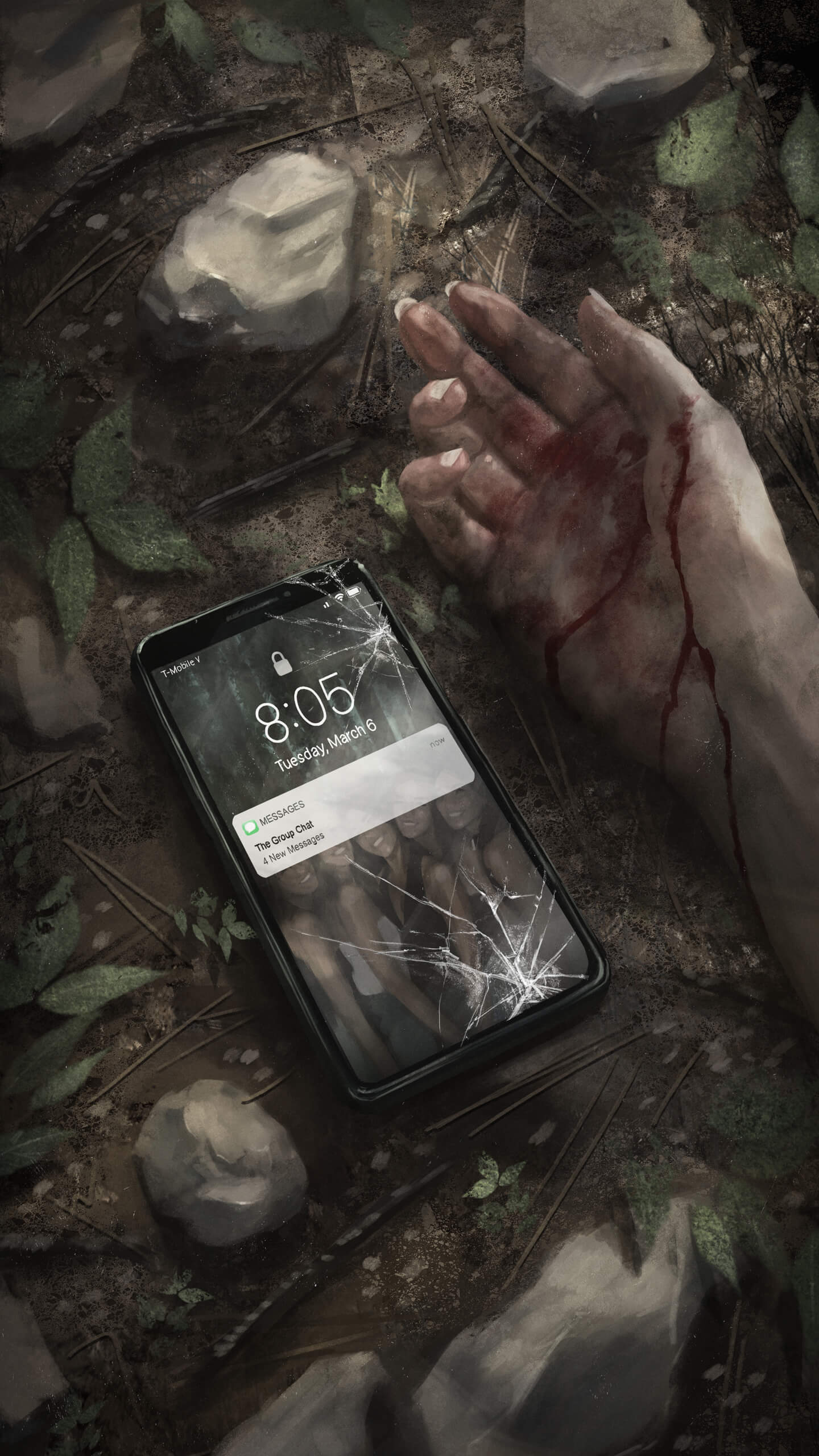
Created by: Danny Ingrassia
I went back to the screenshots.
You said she was alone.
She was.
She wasn’t.
That was the first moment I thought: this might be about Nora.
And once the thought arrived, I could not make it leave.
I knew Nora, but not in the way people are supposed to know the dead. We were neighbors once, three houses apart in the subdivision where Eric and I lived before the divorce split everything down to lamp ownership and streaming passwords. Nora was the kind of woman men call effortless because they do not understand how much skill it takes to make warmth look natural. She remembered names. She remembered birthdays. She taught third grade. She baked those sugar cookies with the too-soft frosting and somehow never acted embarrassed to care about things.
People like that always irritated me a little. Not because she was fake. She wasn’t. That was the annoying part. She was sincere in a way that made everybody around her look a little more jagged by comparison.
After she died, the neighborhood and the school and every woman who had ever worn a cardigan near her turned into a digital shrine. Photos. fundraisers. memory posts. Her husband Ben changed his profile picture to black for a week and then to their dog, which felt somehow worse. Grief reduced to a sequence of acceptable internet gestures.
I had looked at those posts more than I should have.
At 11:07 p.m., the group chat moved again.
We need to deal with this now.
No one replied.
I typed, Why was I added to this?
Nothing.
Then somebody reacted to my message with a thumbs up.
That was the moment I got genuinely concerned. A thumbs up can mean anything from someone who has just gone silent around you. Agreement. Mockery. Confirmation. Warning.
I called my friend Dana.
She answered on the second ring, voice thick with sleep and immediate concern, and used my full name. Nobody calls me Jessica unless they think I am bleeding or about to make a terrible decision. I told her not to do that. She came back sharper, telling me not to call her at almost eleven sounding like that. I told her I needed her to tell me if what I was seeing sounded insane.
Dana exhaled. I heard sheets rustle, then the soft click of a lamp. She told me that those words had never once introduced anything good.
I read her the messages, all of them, slower than I wanted to because saying them out loud made them sound thinner than they had in my head.
When I finished, she admitted it was weird.
I told her that was not enough concern. Dana, dry enough to sting now that she was waking up, pointed out that I had called her at close to eleven because strangers were being cryptic in a group text. I insisted they were not just cryptic texts. When she asked what, exactly, I thought they were, I looked back at the screenshots and told her I thought they might be talking about a murder.
She asked, flat and disbelieving, why I would jump straight to murder. I told her to listen to the messages. You said she was alone. She wasn’t. Don’t say her name in here. I said it did not sound normal. Dana countered that it sounded like people talking about something they did not want in writing, which was not better, but was a lot more common than murder.
I hated how quickly she could cool a room I was already trying to set on fire.
She must have heard something shift in my breathing, because her voice softened. She told me to back up. Asked why my mind was going there.
I hesitated.
Then I gave her the name.
Nora Kemp.
Dana went quiet. Not confused exactly. More like she had stepped onto a stair she had not realized was there. Her confusion was plain. She wanted to know why I was thinking about Nora at all.
I admitted I had searched the number. Dana let out one short, tired breath. This was clearly the least surprising part for her. I told her it had led me to a woman named Kelly Porter, that I had found her Facebook, and that Kelly knew Nora.
Silence.
When Dana spoke again, she did it carefully, like she was trying not to spook something already halfway feral. She reminded me that Nora had died in an accident two months earlier. I made quotation marks in the air at the word accident even though she could not see me. Dana insisted that was what had happened. I told her she did not know that. She asked whether I did.
I didn’t answer.
She let the silence sit between us for a second, then sighed and told me I was alone, it was late, and I was scaring myself. She said to block the numbers, put the phone down, go to sleep, and if it still felt ominous in the morning, do something rational in daylight.
But rationality had already missed its window.
After we hung up, I put on jeans, grabbed my keys, and drove to Nora’s house.
I knew it was a bad idea the way you know a tooth hurts before you tongue it again anyway.
The subdivision was almost completely dark. Porch lights. Sprinklers ticking. The kind of quiet that expensive homes perform at night. Nora’s house sat at the end of a cul-de-sac. I parked half a block away with my headlights off.
The porch light was on. So was the kitchen.
A dark SUV I did not recognize sat in the driveway.
I watched the house for maybe three minutes before the front door opened and a woman stepped out.
Kelly.
I recognized her immediately from Facebook even in the dim porch light. Blonde hair up. Long cardigan. Phone in hand.
She looked up and turned toward the street, toward my car, and I ducked like an idiot.
My phone buzzed in my hand.
A new group message.
She’s here.
The blood drained from my face.
My phone buzzed again:
I told you she was texting.
I did not think after that. I backed up too fast, clipped the curb hard enough to scrape my wheel, and got out of there shaking so badly I had to pull into a gas station two miles later just to breathe.
I did not sleep that night.
I locked the deadbolt, wedged a chair under the knob like a woman in a TV movie, and sat on my bedroom floor refreshing the group chat over and over until my eyes hurt.
At 3:12 a.m., the title changed from Thursday Night to Nora. Thirty seconds later, the chat disappeared. Gone.
The next morning I called in sick to work.
At 9:06 a.m. I got a text from an unknown number.
You need to stop.
No hello. No name. Just that.
I wrote back, Who is this?
Then:
This is already bad enough.
I called immediately.
Kelly answered.
I accused her of adding me to the chat and of being at Nora’s house the night before. She denied the first part and corrected the second. Not Nora’s house. Ben’s house.
That snagged in me.
I asked why she was there. She said she was Ben’s friend. I said Nora had been too, and meant it meaner than I should have. After that, Kelly’s voice changed. The edge fell out of it. She sounded exhausted. She told me to stop whatever game I thought I was playing and said they had all been through enough.
When I pressed her on they, she said she meant Nora’s friends, her family, everybody she had left behind.
That phrasing bothered me. Left behind. As if Nora had chosen distance. As if grief had already been forced to make room for something harder to say.
I asked, before I could stop myself, if she had.
Kelly went quiet, asked me to stop and hung up.
By then, I was not just scared. I was animated.
There is a terrible exhilaration in thinking you are the only person willing to look directly at something other people are trying to hide. It makes you feel necessary. Sharp. Morally awake. It gives shape to days that would otherwise collapse into errands and inboxes and reheated leftovers.
I drove to the state park that afternoon.
The trail where Nora died was wet in patches from old rain. The overlook was not nearly as dramatic as I expected. That bothered me more than it should have. It looked like a place where a person could absolutely slip and die, which was inconvenient to the version of the story already taking root in me.
I stood there trying to imagine her falling.
Then I saw the surveillance camera near the trailhead kiosk.
A little black box angled toward the lot and the first stretch of trail.
It felt like luck. Something external. Mechanical. Honest in a way memory isn’t.
If anyone else had been there with Nora that morning, maybe the camera had seen them.
I took a photo of it and went home.
My apartment door was unlocked.
I am obsessive about locks. Since the divorce, maybe before. I check them twice. Sometimes three times. So when I saw the tipped chair and the loose latch, I knew at once that someone had been inside.
Nothing obvious was missing.
That made it worse.
My living room looked untouched. The kitchen too. But the bedroom had the slightly wrong feeling of a room a stranger has tried to put back together after searching it. My top dresser drawer wasn’t fully closed. The framed photo of my sister and me had been turned inward a few degrees. And on my pillow, laid neatly in the center, was a printed photograph.
Me.
At Nora’s funeral.
Across the bottom, in blue ink, someone had written:
You were there too.
I called the police.
They came. They listened. They were professionally unimpressed.
I showed them the screenshots, the texts, the photo on my pillow. One asked about my ex-husband. The other asked whether I had been sleeping. What they wanted was something clean: a direct threat, a broken lock, a stranger caught in the act. What I had was implication, a loose latch, and the sick feeling that somebody knew more about me than they should.
After they left, I sat on my bed holding the photograph and reading the message across the bottom again.
You were there too.
Not we know where you live. Not stay away from Ben. Just that. Accusatory.
Like whoever left it thought I had a role in this story bigger than the one I was admitting.
I called Dana again, and this time she came over with takeout and a bottle of wine hidden in her purse, because apparently we were now old enough to care what the neighbors inferred from grocery bags.
We sat at my kitchen table under the overhead light, and I told her everything.
Dana listened, then steered me back to the funeral, which I had been circling without admitting I was circling it. I finally told her I had spoken to Ben there. Drunk, of course. Drunk enough to say the kind of thing no decent person says to a grieving man beside a folding table of funeral sandwiches. I had told him I did not think Nora’s death had been an accident.
Dana was horrified in exactly the amount I deserved.
Then I admitted the part I had never told anyone: Ben and I had kissed once, months earlier, at a Christmas party. Brief, stupid, shameful. At the time I told myself it meant nothing. After Nora died, I started treating it like evidence. As if shame had made me insightful.
I did not tell Dana all of that exactly, but I told her enough.
She sat with it for a moment, then said something I did not want to hear: that the group chat might not have been about a murder at all. It might have been about me. About the messages to Ben. About my showing up at the house.
I wanted to argue.
Instead, I sat there feeling the messages rearrange themselves under my skin.
That night, after Dana left, I got an email from an address I didn’t recognize.
No subject line. No message. Just an attachment.
A silent video.
I opened it and saw security footage of the church parking lot from Nora’s funeral.
For a second I didn’t understand what I was looking at. Just gray sky, rows of parked cars, the side entrance to the church. Then I saw myself come into frame in black heels, one hand wrapped around a plastic cup. Even through the grainy footage, I could tell by the way I was walking that I had already had too much to drink.
Ben stepped out a few seconds later.
We talked and even without audio I could see too much. The forward pitch of my body. The way I kept leaning back in after he tried to create space. His face shut tight with grief and irritation. Mine too animated, too loose, the way drunk people look when they think they are being intense and honest but are really just impossible.
Then came the part I did not remember.
I kissed him.
Not the Christmas-party kiss. Not the one I had already filed away as my single shameful mistake.
This was at the funeral.
I was the one who did it.
I lurched toward him and put my mouth on his.
He shoved me back immediately. Hard enough that I stumbled in my heels. His mouth moved. I didn’t need sound to understand it.
Go home.
The video ended.
I watched it four times.
By the fourth, my face was hot and my hands had gone cold.
Not because of the kiss itself, though that was humiliating enough. Because I had not remembered it. I had remembered the earlier kiss. I had carried that one around, turned it over, assigned it meaning. But this one, the uglier one, the one that made me look sloppy and pathetic and dangerous, was just… gone.
Not gone, exactly. Buried.
It was not the first time alcohol had blurred the edges of a night. It was just the first time the missing piece had been handed back to me.
Then my phone buzzed.
Unknown number.
Now do you understand why we wanted you to stop?
I stared at it, then typed back:
Did Nora’s friends send that?
A minute later, another message appeared.
Leave Ben alone. Stop calling him. For Nora.
I read it twice. Then a third time.
Stop calling him?
I actually said it out loud to my empty apartment, as if hearing the words might make them belong to someone else.
I didn’t remember calling Ben.
Not recently. Not after the funeral. Not after any of this started.
Minutes before this, I would have sworn I had never kissed him in a church parking lot with a plastic cup in my hand and Nora barely in the ground.
I looked back at the video thumbnail.
At my own body leaning toward him with that awful drunken confidence.
At the cup.
At the way he recoiled.
A thin, sick feeling moved through me.
There had been other nights after the divorce. Nights I had poured wine into a coffee mug because it felt less shameful if I couldn’t see the red liquid. Nights I woke up with texts I didn’t remember sending and told myself I was just tired. Emotional. Going through a hard season. All the soft little phrases people use when they are trying not to look directly at a problem.
I opened my call log with my thumb suddenly gone clumsy on the screen.
Ben’s name wasn’t there in recent calls.
That didn’t help.
It only meant I’d have to dig farther.
I sat on the edge of the bed with the phone in one hand and the church parking lot frozen in the other, feeling the first clean split between what I knew and what I had been willing to know.
The next morning I went looking for the version of myself the wine kept hiding.
Three calls to Ben the week before Nora died.
No memory of them.
Then one more entry on the morning Nora died.
6:02 a.m.
Outgoing call to Nora.
Answered.
43 seconds.
I stared at that line until the room seemed to tilt.
I did not remember calling her, or why she would answer.
So I opened my Google timeline.
It is strange what we trust. Not our minds. Not our instincts. Little blue dots generated by a machine.
I searched the date Nora died.
The map loaded.
Home.
Gas station off K-10.
State Park West Trailhead.
I said “no” out loud before the details even finished populating.
Then I zoomed in.
7:14 a.m. to 8:03 a.m. State Park West Trailhead
My whole body went cold.
I checked my bank app.
6:48 a.m., gas, coffee and a half pint of vodka at the same station.
Then I opened deleted photos.
Most were nothing. Receipts. An accidental black square. One blurry image of my own steering wheel.
Then a Live photo, timestamped 7:19 a.m. that morning.
It looked useless at first. Just rock and the tip of my shoe.
I held it down.
The image moved.
Gray stone. Wind. My own breathing.
Then Nora’s voice, very close and furious:
You do not get to act like this happened to you.
The clip ended.
That sentence opened the door just enough.
My memory did not return like a movie. It came back like broken glass, piece by piece, each edge cutting on the way in.
Her voice on the phone that morning.
Then come say it to my face.
Driving too fast.
The trail slick from rain.
Nora in a rain jacket, already angry, already finished with whatever excuse I thought I had brought there.
I remember saying Ben kissed me too.
I remember her laughing once, short and disgusted.
Then: Jess, he told me everything.
And after that, the sentence that keeps replaying because it found exactly the part of me that deserved it.
You are not the victim in every room you enter.
I stepped closer.
She told me to stay away from her husband, her house, her life.
I grabbed her wrist.
That is the hinge.
Some ugly little lawyer in my head still wants to say I was not trying to kill her. That I only wanted to stop her from walking away. That the rock was wet. That she slipped.
She did slip.
And I was touching her when she did.
Her foot went out from under her. Her body twisted. She hit the lower rock shelf hard, shoulder first, then head, with a sound I have started hearing in quiet rooms.
After that there is blur.
Not because nothing happened. Because too much did.
I know she was alive at first. I know because I remember her hand moving. I know I climbed down partway because the jeans I wore that day had mud at both knees and a tear in one pocket I never explained. I know she looked at me.
I do not remember whether she said my name.
I do remember my first clear thought, and it is the thing I hate most about myself.
It wasn’t help her. It was: This cannot be happening to me.
To me.
I did not go there planning to kill Nora.
But she fell because my hand was on her.
And she died because I left her there.
I do not remember making some grand evil choice. There was no sentence. No switch flipping. Just hesitation hardening into action by way of inaction. Silence. Shock. My body climbing back up the trail while my mind kept insisting there had to be a version of this that was still survivable.
By the time the news broke later that day, the world already wanted it to be an accident. I let it.
And then memory did what memory does when the truth would destroy the self.
It edited.
By the time of the funeral, I had rebuilt myself into someone suspicious instead of guilty. Concerned instead of unstable. Brave enough to ask questions instead of too ashamed to sit down and shut up. I had turned obsession into moral clarity because that version of me hurt less to inhabit.
The group chat makes perfect sense now.
She already has been
Texting Ben.
Then block her
That looks worse
You said she was alone
At the trail.
She was
She wasn’t
Nora was not alone.
She was with me.
The photo on my pillow. You were there too. Not a threat. A correction.
The funeral video.
Not blackmail. Evidence.
The text. Now do you understand why we wanted you to stop? Not confession. Desperation.
They knew, or suspected enough. Nora’s friends. Kelly. Maybe the others. Enough to talk around it, enough to watch me circle Ben and panic, enough to decide I was a danger to whatever version of the truth they were trying to preserve.
They were wrong to break into my apartment and frighten me.
Wrong in ways that probably do not matter now.
But they were not wrong about the center of the story.
I was.
At 4:03 that afternoon, the unknown number texted one last time.
Do you remember now?
I looked at it for a long time.
Then I wrote:
Yes.
No answer came back.
I used to think the worst kind of person was the one who does harm and feels nothing. I know better now. It might be the one who feels just enough to build a prettier story around herself. The one who calls obsession instinct, jealousy concern, guilt confusion. The one who can stand in the wreckage of another woman’s life and still, somehow, make herself the center of what happened there.
I kept saying I wanted the truth.
That is the lie I can never forgive.
Because the truth was never buried. Not really. It lived in the gaps. In the calls I could not explain. In the missing memory around the funeral. In every message that made my heart pound because some part of me already knew exactly what they meant.
I was not hunting a killer.
I was building one out of everyone else so I would not have to see the woman on the trail.
The woman with her hand on Nora’s wrist.
The woman who looked down, understood enough, and walked away.
My name is Jess.
And Nora Kemp was not alone when she died.