Please note: this story was provided by the author and published as is.
I started locking the door after my daughter fell asleep
I don’t know when it started feeling wrong to leave the door unlocked.
I know that sounds like the kind of sentence people write when they already know something terrible is coming, but that isn’t how it felt at first. It didn’t feel like danger. It felt like inconvenience, like a mild irritation my brain kept circling without ever landing on. More than fear, it was the sensation of a splinter you can’t find but can’t stop touching.
For years, I never thought twice about it. We live in military housing, on-base, assigned, the kind of place that only looks normal if you’ve never lived in it. Everything here is neat in a way that feels intentional: lawns trimmed to the same length in the few months they can be, sidewalks poured in straight, obedient lines, and houses spaced just far enough apart to suggest community without ever forcing it. The colors are neutral, beige and gray and blue that fades into snow glare, all of it chosen so no one gets attached.



If you know, you know.
That kind of restraint carries over into how people live here. No one personalizes much because no one plans to stay. Porch furniture is minimal. Garages close quickly. You learn which houses are occupied by the glow of a television at the same hour every night, and which ones are technically lived in but never seem to change.
The neighborhood is bright in a way that feels exposed. There are no tall trees and nowhere for shadows to settle, and in winter the snow reflects light upward so even the dark looks pale and watched. You can see down the street for too long, and you can see who’s coming long before they’re close enough to matter.
And yet, somehow, you never really see anyone arrive.
We’re here because the map says so.
Fort Greely exists because someone, somewhere, decided it needed to. Not because it was pleasant or convenient, but because it solved a problem most people never think about. It’s a dot on a map that means something if you know what to look for.
I told myself I would get used to it.
Mark had.
He’s Army, active duty, stationed here because his job is technical and quiet and important enough that people stop asking questions once you say where we live. He works with systems and screens and alerts that are supposed to notice things before anyone else does, and when he used to explain pieces of it to me, he did so carefully, the way you explain something you love but can’t fully share.
Sometimes he would point at a map on his phone, zoomed out so far it looked like weather, and say, This is why we’re here, as if that alone were explanation enough.
Then his orders came.
There was no ceremony and no neat line of families waving flags, just a checklist left on the counter, a duffel bag that never felt big enough, and his boots lined up by the door for one last night. Emma cried because Daddy’s uniform always felt scratchy when she hugged him. She didn’t care, though. She pressed her face into his chest anyway, like she could absorb him through the fabric.
He kissed the top of her head and told her to listen to me, and before he left he stood in the doorway looking at me for a long moment, like he was trying to memorize my face in good lighting.
“You’re going to be fine,” he said.
People say that when they don’t know what else to say.
After he left, time didn’t move the way it used to. It started marking itself in smaller, quieter ways. The fridge still has a countdown calendar from the first month, half-crossed out and forgotten. Emma colored the days in with marker until the ink bled through the paper, and I peeled it off and put it back anyway because throwing it away felt like admitting something I wasn’t ready to admit. Now it hangs crooked, curling at the corners like it wants to fall.
Emma asks when Daddy is coming home, and I tell her soon because anything else feels like lying louder.
She’s six. She sleeps with her door cracked open, always has, because she says she likes knowing I’m still there. Most nights I sit on the edge of her bed until her breathing evens out, listening for the moment her fingers unclench from the blanket. Sometimes she talks in her sleep, school words and cartoon names, and once she whispered my name like she was checking that I still answered.
That’s why I keep the hallway light on now.
At first, the hallway light was for her, a compromise, a thin line of safety spilling under her door. Over time, though, I realized it was me who needed it. The dark here doesn’t feel like other dark. It isn’t just the absence of light. It presses back.
That awareness was already there the first night I heard the sound and told myself it was the house.
It was just after two in the morning when something shifted in the hallway, and it wasn’t the kind of noise that comes from pipes or cooling wood, but the sort made when someone adjusts their weight slowly and deliberately, as if trying not to be noticed. I stared at the ceiling and reminded myself where we were and how safe this place was supposed to be, with a gate and IDs and patrols and cameras and rules layered on top of rules, all of it designed to keep things orderly and contained.
I didn’t get out of bed to check, and instead I lay there until exhaustion finally dragged me under.
The next morning, that decision came back to me when Emma asked why I walked around her room at night. We were eating cereal, the kind that turns the milk faintly blue, and she was sitting across from me swirling her bowl as she asked it casually, like she was asking me to pass the spoon. I laughed too fast and told her I hadn’t, that I’d been asleep all night, but my voice sounded wrong the moment it left my mouth, and she watched me for a second longer than usual before shrugging and going back to her cereal.
That night, I locked the door, not because I thought it would change anything yet, but because it felt like the smallest way to acknowledge that something had unsettled me. After that, a week passed and nothing happened, which made it easy to believe I’d overreacted. You relax, and you let the quiet convince you it’s earned, and you tell yourself that if something were wrong, you would know it.
That’s why the footprints caught me completely off guard.
They were faint, pressed into the dust along the baseboards, bare feet leading from the hallway toward Emma’s room, too big to be hers, the toes spread wrong like whoever made them wasn’t used to walking barefoot. I crouched there longer than I meant to, trying to convince my brain they were smudges or accidents or anything but what they were, and my first instinct wasn’t fear so much as shame, the sudden sense that I had done something wrong simply by noticing.
I wiped them away before she woke up, and afterward I tried to undo the feeling by cleaning the house, vacuuming even the rooms we don’t use, moving furniture and emptying the canister twice, as if restoring order might also restore the part of me that had started to feel unsteady. When I finally stopped cleaning, I stood in the hallway and realized the house didn’t feel empty anymore.
After that, I started doing something else I didn’t tell anyone about.
Before bed, I began taking pictures of the house, nothing dramatic, just proof: the hallway, the front door latch, Emma’s door cracked at the same angle, my bedroom door closed, the deadbolt turned. I don’t know when I stopped trusting my memory, only that by the time I noticed, it already felt necessary.
I didn’t tell Mark what was happening, maybe it was my way of pretending that nothing was. Our calls were short and careful, shaped by time zones and bad connections, and I filled them with safe details instead: school schedules, grocery shortages, how cold it was, the way my nose kept bleeding from the dry air. When he told me to lock the doors at night, he said it casually, the way you say something obvious, and I didn’t tell him that the locks weren’t the point anymore.
Around that time the neighbors started to feel strange, though at first it felt more like a pattern I couldn’t quite name than a threat.
The dog walker passed every morning with the leash hanging loose, the dog never stopping to sniff like a real dog would.
And a man down the street stood on his porch most nights holding a cigarette that never seemed to burn down.
I was already thinking about the neighbors one afternoon when Emma stopped coloring at the kitchen table and spoke without looking up.
“Mom,” she said, very quiet.
I looked over at her but didn’t answer right away, waiting for her to keep going.
“What?” I finally asked.
“The neighbors are doing the wrong thing.”
I asked her what she meant, but instead of answering she pointed her crayon toward the window without looking away from her paper.
“They keep waving when nobody is outside.” I went to the window.
Across the street, the dog walker was standing on the sidewalk without her dog, lifting her hand and waving at an empty driveway in a slow, patient motion, the kind that didn’t seem meant to attract attention so much as wait for it. After a moment, she turned her head toward our window.
And waved at me.
I stepped back so fast I bumped the kitchen chair. Emma didn’t look up. She kept coloring, but her hand shook enough that the crayon dragged jagged lines across the page.
That night, Emma woke me crying.
She wasn’t screaming or running, just sitting upright in bed with tears slipping down her face, crying quietly like she was trying to be brave about it. When I asked her what was wrong, she lifted one hand and pointed toward the doorway.
She told me someone had been standing there. She said she couldn’t see their face, but she knew they were watching her, and that they breathed too loud.
I checked every room. Every lock. The alarm was armed. Nothing was missing, and nothing looked disturbed.
When I crossed back into the hallway, the bathroom door was open.
I know I had closed it. I remember doing it carefully so it wouldn’t click, leaving it that way because light spills differently when it’s shut.
The door hadn’t just opened.
It had been opened deliberately.
That night I slept with my phone in my hand.
Sleep turned into a negotiation after that. I learned how long I could function on fragments, how many hours I could steal before the edges of the day began to blur, and how much vigilance I could carry before it started to feel like habit. I checked the locks twice, then three times, and eventually I took it one step further and taped the deadbolt so I’d know if it moved.
The tape was torn the next morning.
I told myself it was adhesive failure. Cold. Humidity. Cheap tape.
But the edge looked pulled.
I called housing maintenance and told them the lock was sticking. The woman on the phone asked for Mark’s name first, then mine, and she paused just a little too long between questions.
“Can you confirm your sponsor’s unit?” she asked.
I answered.
“And your full name again?” I answered that too.
There was another pause before she spoke.
“Okay,” she said. “We can have someone there Thursday between 0900 and 1200.” It was Monday.
I didn’t ask why it would take days, and I didn’t ask if anyone else had called about our unit or who had access to keys. When you live on a base, you get good at swallowing questions.
That afternoon, I installed cameras because I needed something that didn’t rely on my memory. One in the living room facing the front door, one in the hallway aimed toward the bedrooms, and one at the back door. I avoided Emma’s room. It felt wrong to watch her sleep, and it also felt like inviting something else to watch with me.
Nothing showed up.
That scared me most.
Around that same time, Emma started drawing pictures. Tall figures with long arms and no faces, always standing in doorways or at the end of the hall. When I asked her what she was drawing, she didn’t look up from the paper.
“He doesn’t like when you look,” she said.
I asked her who she meant.
“The one that comes when you don’t remember.”
I laughed then, because that’s what adults do when they’re trying not to fall apart, but the sound came out sharp and wrong. Emma flinched and finally looked at me.
“Don’t do that,” she whispered.
I asked her what she meant.
“Act like you don’t know.”
It started with the bathroom mirror. When I leaned closer, I saw fingerprints on the glass, too high to be Emma’s and spread wide like someone had rested their hands there instead of just touching. The kind of mark left when someone leans in close and breathes against the surface.
I scrubbed the glass clean, but it didn’t make me feel better.
So I covered it anyway. The bathroom mirror first, then the others.
Emma noticed right away.
“Why does the house look scared?” she asked.
I didn’t answer.
The next morning, we went outside to wait for the school bus. The air was so cold it made my nostrils stick together when I breathed, and Emma’s hair, still damp from her shower, froze into thin, crunchy strands around her hood. Her backpack looked too big for her small shoulders, pulling her backward as she shifted her weight.
The man on the porch was there, smoking.
He raised his hand and waved slowly.
Emma didn’t wave back. Instead, she stepped closer to me and spoke without looking up.
“They already know us,” she whispered.
Then the bus came.
Emma climbed on, and I watched her take a seat, watched her turn and look back at me through the glass like she was checking to make sure I didn’t change shape once she wasn’t looking. I waited until the bus pulled away before I finally lowered my hand.
Across the street, the dog walker stood in her driveway, waving.
Not at Emma. But at the bus. Like the bus was a person she recognized.
That was the moment I decided to ask for help.
Not emergency help, and not the kind that comes with sirens or reports. Just help. The reasonable kind. The kind you’re supposed to ask for before things become something else.
I started with housing because it felt safe. Administrative. Boring. The kind of place where nothing bad ever happens.
The waiting area smelled like disinfectant and old carpet. A television played a morning show with the sound turned down, and the walls were covered with pamphlets about move-out checklists, lawn care rules, and a flyer advertising a holiday cookie exchange that had already happened.
A woman behind the desk looked up and smiled at me, and it was a real smile. Friendly. Reassuring.
“How can I help you today?” she asked.
I told her I thought someone had access to my house.
Her smile softened.
“Okay,” she said calmly. “Let’s talk about that.”
I explained about the door and the tape and the maintenance call, choosing my words carefully and leaving out the parts that felt harder to justify. I didn’t mention the footprints or the cameras. I stayed reasonable.
She nodded as she typed notes into her computer.
“Your sponsor is deployed, correct?” she asked without looking up.
I said yes.
She paused for a moment before speaking again.
“Sometimes spouses feel heightened anxiety when they’re alone for the first time,” she said gently.
I forced my voice to stay steady.
“This isn’t my first time being alone,” I said. “It’s the first time I’ve ever experienced this.” She didn’t respond right away.
When she did, she didn’t look at me.
“Especially up here,” she said calmly. “It’s a hard place.” Then she glanced back at her screen.
“Our records don’t show any recent maintenance entries besides the lock request.” I asked if it was possible someone else had a key.
“Keys are tightly controlled,” she said. “Only authorized personnel.”
I waited for the part where she took it seriously.
Instead, she offered another option.
“Have you considered talking to Behavioral Health?” she asked. “Or the Chaplain?” It wasn’t cruel.
And it wasn’t dismissive.
It was worse, a gentle turning of my experience into a me problem.
I left with a pamphlet folded into my pocket and a knot in my stomach, and from there I went straight to the MP desk because I needed something firmer than empathy.
Uniforms. Structure. Authority.
The desk officer listened while I explained, and he asked practical questions as he took notes.
“Has anything been stolen?” he asked.
I said no.
“Any sign of forced entry?” No.
“Anyone threatening you?” No.
Then he hesitated before asking the next question.
“Any history of sleepwalking?” I hesitated too long before answering.
“Not that I know of,” I said.
He nodded slowly, like that answer fit into a box he already had prepared.
“Ma’am,” he said, “without an active threat, there’s not much we can do.” I asked him what would happen if someone was in my house while I wasn’t there.
“We can do a welfare check if you want,” he offered.
I pictured MPs standing in my living room, looking at covered mirrors and barricaded furniture, Emma clutching my leg while I tried not to sound insane.
I shook my head.
“Okay,” he said. “If anything changes, you call us.” I walked out feeling smaller than when I’d gone in.
After that, I tried the Chaplain, because part of me wanted someone to tell me this meant something, or that it didn’t.
He was kind. Too kind. He listened without interrupting while I talked, and when I finished he folded his hands together on the desk.
“Isolation can do powerful things to the mind,” he said gently.
I asked him if he believed in evil.
He paused before answering.
“I believe in fear,” he said.
I left before he could say more.
That afternoon, Emma climbed into the car after school without speaking. We were halfway home when she finally broke the silence.
“You talked to them, didn’t you?” she said.
I asked her who she meant.
“The ones who don’t listen,” she said.
My throat tightened, and I asked her what made her think that.
“They don’t hear it,” she said simply. “Only we do.”
That night, something happened that took doubt off the table.
It was still light out, the sky that washed-out blue that makes everything look unfinished. Emma was doing homework at the kitchen table, and I was folding laundry when the front door opened.
Not fast. Not loud.
Just opened.
I froze, staring at the doorway as a woman stepped inside, and my attention snagged immediately on the details that told me she belonged here: the base-issued jacket zipped halfway up, her hair pulled back tight, her posture casual and unafraid.
It took a second for recognition to catch up.
It was the dog walker.
She smiled at me the way people do when they expect the space to already accept them.
“Oh,” she said lightly. “Sorry. Wrong house.”
Then she stepped back out and closed the door behind her.
Emma stared at me.
I stared at the door.
Then I ran outside.
The street was empty. No woman. No dog. No sound but my own breathing. I checked both directions, scanning the sidewalks and driveways, but there was nothing to suggest anyone had been there at all.
I went back inside and checked the camera footage.
There was no clip.
The camera had recorded everything else that day: the mail truck stopping at the corner, a gust of snow sliding off the roof, me taking out the trash and waving at no one in particular.
But not that.
After that, the cameras started showing things that were almost normal.
At first it was small enough to ignore. Reflections that lagged behind the room by half a second. The kind of thing you can argue yourself out of if you try hard enough.
Then one night the hallway camera triggered a motion alert.
My hands shook as I opened the clip.
The hallway was empty, but the audio caught something soft. Almost like a wet fingertip dragging slowly across a surface.
Around that same time, Emma’s drawings changed.
The figures got closer. Bigger. Sometimes Emma drew two versions of me standing side by side, one smiling and one not. Other times she drew the street with all the houses lined up neatly and put stick figures in every window, all of them waving.
After that, I tried to act normal. I made dinner. I told jokes. I followed routines because they were already there and easier than stopping.
My body moved through the day on habit alone while my mind spun itself into knots.
One morning I found Emma’s shoes lined up perfectly at the front door, toe-to-toe, as if someone had practiced making them neat. Emma wasn’t that kind of kid.
I asked her if she had done it.
She looked at me like I was being cruel.
“No,” she said. “He does it when you forget.”
It was the first time she used the word forget like it meant something bigger than a lost key or a missed appointment.
I stopped pretending I could ignore it. I pushed the couch across the hallway entrance and stacked chairs behind it, building a barricade between the bedrooms and the rest of the house.
I slept on the floor outside Emma’s room.
At 1:47 a.m., the couch creaked.
Not settling. Not temperature change.
A slow groan, like something leaning its weight against it.
The hallway light clicked off. I hadn’t touched the switch.
The darkness behind the couch thickened, turning into something solid, and when Emma’s door creaked it didn’t open, it only shifted slightly, like someone had touched it and let go.
I turned on my phone flashlight.
The beam hit the couch.
A handprint pressed into the back cushion, not dust but fabric flattened under pressure. The fingers were too long.
I wiped it away with shaking hands, and the cushion rose back into shape as if it had never been touched at all.
When morning came, I checked the cameras.
There was nothing.
No motion events.
It was as if the house knew exactly where the cameras couldn’t argue.
After that, I did something I hadn’t done yet.
I called Mark in the middle of his day.
The phone rang until it went to voicemail. I didn’t leave a message. I just stared at the screen for a moment too long and then hung up. A minute later, a text came through.
I’m in a brief. Can’t talk. Everything okay?
My thumbs hovered over the screen. I couldn’t type the truth, and I couldn’t bring myself to type the lie either. In the end, I settled on the safest sentence I could find.
We’re fine. I miss you.
He replied with a heart emoji, which is not his style, and I stared at it longer than I should have before locking the phone.
That night, the breathing returned.
I felt it beside me as the mattress dipped slowly, deliberately, and the air filled with a stale smell, like a room that had been sealed for years. I kept my eyes closed and counted my breaths, telling myself that if I stayed still long enough it would pass.
They didn’t match.
Then my own voice whispered in my ear.
“She believes me now.”
I don’t remember falling asleep.
I woke to Emma shaking my shoulder.
“Mom,” she whispered. “Why are you in my bed?” I was.
The hallway light was on, and my mouth tasted like metal. When I tried to speak, my voice sounded wrong, like it had to force its way through a throat that didn’t belong to me.
On the floor were footprints.
Two sets.
One small.
One mine.
Except the larger ones pointed inward, the angles wrong, like the legs attached to them didn’t understand how they were supposed to work.
The morning passed in fragments. Emma watched cartoons while I tried to pretend the house was normal.
When she wasn’t watching, I checked the cameras again.
This time, there was footage.
The timestamp read 2:17 a.m.
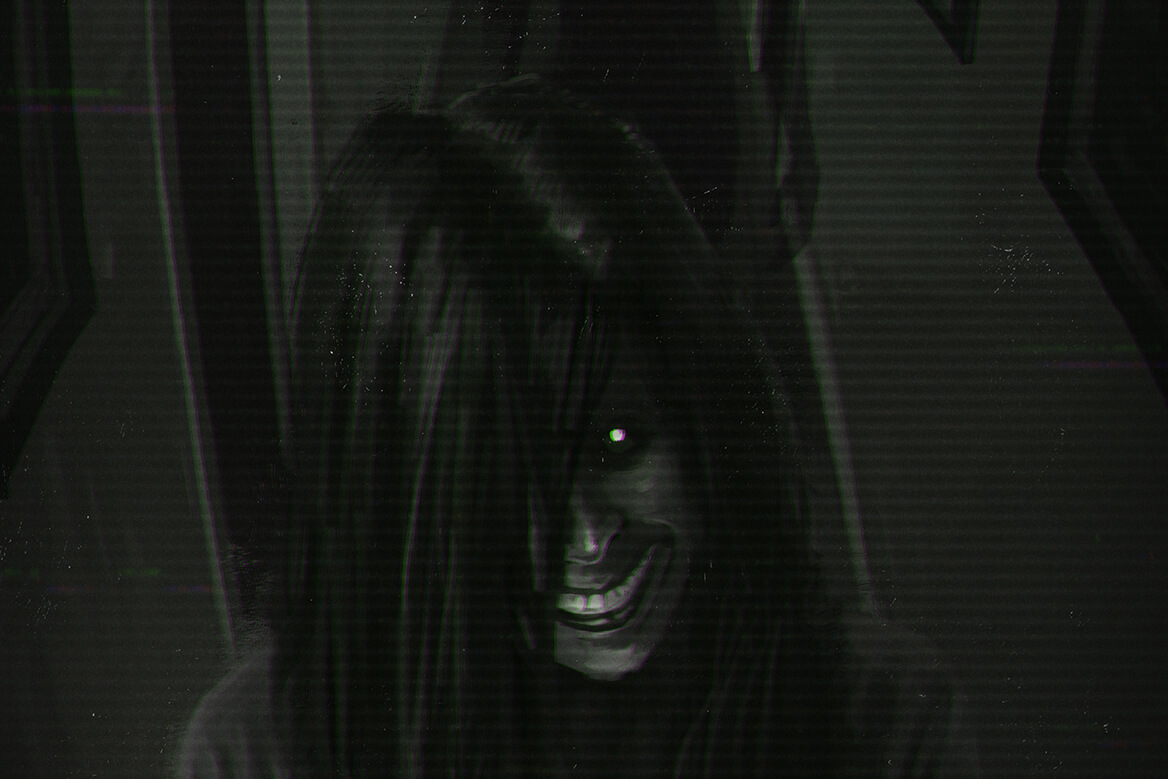
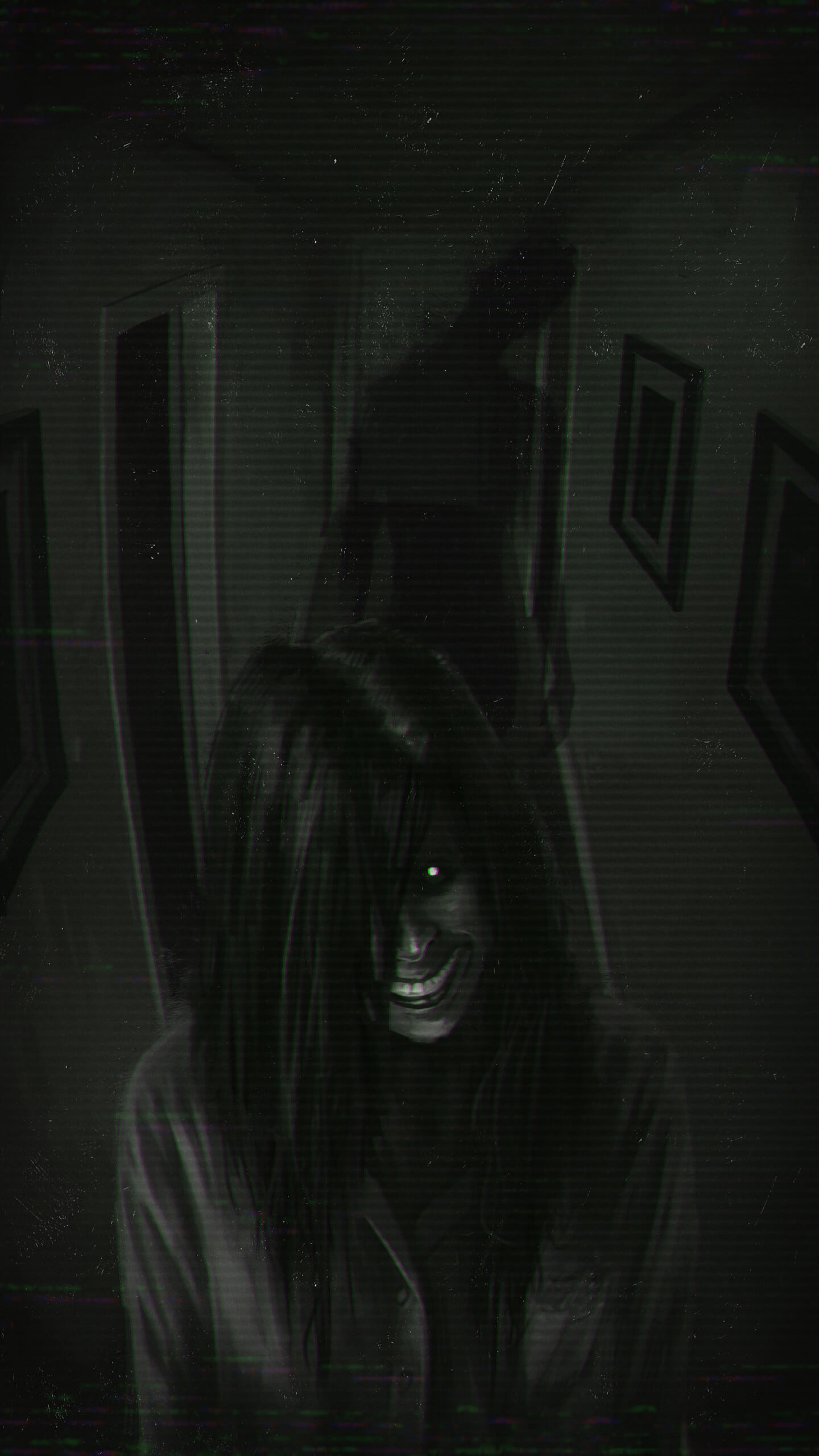
I watched myself leave my bedroom, wearing the same pajamas, my hair the same way I always wore it to sleep. My eyes were open too wide, and I was smiling.
Created by: Danny Ingrassia
Behind me, something stepped out of the dark at the far end of the hallway.
It was tall, bent wrong at the shoulders, its head tilted slightly as if it were listening.
It took one step forward, and then the hallway camera cut to static.
Not a blur.
Static. Like an old television with no signal.
Three seconds later, the feed came back, and the hallway was empty.
I replayed it until my stomach turned.
I noticed the living room camera had captured movement at the front window at the exact same moment.
A face.
Not close enough for details, but close enough to recognize the shape.
It was the dog walker.
She was standing outside in the dark, facing the glass, waving slowly.
Like she was checking that it worked.
I shut the laptop so hard it cracked.
That’s the part people don’t understand about fear. It isn’t always screaming or running or panic. Sometimes it’s sitting very still at a kitchen table, trying not to lose your mind in front of your kid.
I tried calling housing again.
The phone rang until it stopped.
Then I called base security. The man who answered sounded calm, professional.
“Is there an active threat?” he asked.
Active.
Threat.
I looked down the hallway at the covered mirrors, the fabric bulging slightly now, no longer lying flat against the walls.
“I don’t know,” I said.
“Is someone in the house right now?” he asked.
I swallowed.
“I don’t know.”
There was a pause before he spoke again.
“Would you like an officer to come by?” Yes, my entire body wanted to say.
But my mind jumped ahead to the polite look, the controlled patience, the way people look at you once they’ve decided you’re the problem.
“No,” I said. “It’s okay. I’m sorry.”
I hung up and hated myself for it.
I drove Emma to school because I didn’t want to see someone waving at the bus.
Routine.
Normal.
Keep moving.
The road was hard-packed snow, and the sky was the color of dirty cotton. My hands clenched the steering wheel so tightly my knuckles hurt.
At the gate, the guard leaned down to check my ID. He looked at it, then at me, and then back at it again.
“Ma’am,” he said.
I asked him what was wrong.
“New photo?” he asked.
I forced a laugh.
“Same one.”
He stared at me for one extra second before handing it back.
“Have a good day.”
His voice was normal.
His eyes weren’t.
I kept driving.
At school, Emma hesitated at the door before getting out of the car.
“Mom,” she whispered, “don’t forget which one you are.” I crouched in front of her and tried to smile.
“I won’t.”
She reached up and touched my cheek with two fingers, like she was checking my temperature, and then she turned and went inside without looking back.
I sat in the car afterward, shaking, and I realized I couldn’t remember locking the front door when we left.
I drove home fast.
When I pulled into the driveway, the porch light across the street was on, as always. In the front window, a shape moved.
It looked like a child.
Standing still.
Watching.
I blinked hard, and the window was empty.
Inside, the house smelled like laundry detergent and something else underneath, faint and sour, like breath caught in fabric. The living room camera light blinked to indicate a motion event.
There was footage timestamped 8:03 a.m., right after we left.
I tapped the clip and watched.
The front door opened.
I stepped inside.
I took off my coat.
I walked down the hallway.
Then I turned and looked directly into the camera.
My face filled the frame. My eyes were open too wide.
I was smiling.
Then I reached up and covered the lens with my hand.
The clip ended.
I stared at it until my vision tunneled.
Mental chaos stopped being a metaphor and became my entire environment. I started doubting every minute, every conversation, every lock I touched.
I opened my phone and scrolled through my messages.
There were texts to Mark I didn’t remember sending. Short. Normal.
Miss you.
Love you.
Emma is good.
Except the timestamps were wrong.
2:19 a.m. 8:05 a.m.
Sent while I was asleep, or driving, or sitting at a table trying not to shake apart.
I thought about calling a friend, and then I realized I didn’t have one here in the way you have friends in normal places. We had acquaintances. Wavers. Nodders. People you could talk to about the weather, not about seeing your own face on camera while you weren’t home.
The next day, Mark texted me.
Just landed. Miss you. Almost home.
My stomach dropped.
Not home-home. Not back to our old life.
Here.
Tonight.
By the time Emma came home from school, the house felt busy. That’s the only word that fit, like the air itself had intention behind it. She stopped just inside the doorway and stood there for a moment, breathing in like she was smelling smoke.
“It’s busy,” she said.
I asked her what she meant.
“The house,” she said. “It’s busy today.”
I tried calling Mark, but it went straight to voicemail. I left a message that made no sense, too many words and not enough explanation. I told him to wait. I told him not to come inside. I told him I loved him.
I didn’t know which part mattered.
At 6:47 p.m., headlights swept across the living room wall.
Emma grabbed my arm so hard it hurt.
“That’s him,” she whispered.
The engine cut off outside. A car door opened. Boots crunched on gravel, and my heart hammered so loud it blurred everything else. When the front door handle turned, I stood up so fast the chair behind me tipped backward.
Emma spoke again, quieter this time.
“Wait,” she said. “Listen.” I did.
There were two sets of footsteps on the porch.
One heavy and familiar.
One soft. Careful.
Then the door opened.
Mark stepped inside.
He looked thinner. Exhausted. Real.
Relief crashed over me so hard my knees nearly gave out.
Then he smiled.
And my blood went cold.
Because the smile was wrong. Not cruel. Practiced. Like he was wearing his face the way someone wears a uniform they’ve studied carefully.
“Hey,” he said.
His voice was perfect.
Behind him, in the dark of the porch, something shifted.
Emma screamed.
Mark turned toward her, and concern slid into place like a mask.
“Hey, sweetheart,” he said gently.
Emma shook her head, crying harder now.
“That’s not you,” she said.
The thing behind him stepped forward into the porch light.
It was tall, bent wrong through the shoulders, its skin shifting as it settled, pulling itself tighter, as if adjusting to gravity.
Mark’s smile flickered.
Just for a second.
Enough.
I understood then.
It never needed to replace me.
It needed to replace us.
Outside, porch lights flicked on in unison.
Through the windows, shapes stood watching, not curious, not alarmed, but expectant.
From the hallway behind me, something stepped into the edge of the living room light.
My height.
My posture.
My face, wrong by a fraction.
I felt its breath at my ear.
“Don’t make this harder,” it whispered, using my voice.
I grabbed Emma and ran.
The back door opened into cold so sharp it burned my lungs. Snow squeaked under my boots. The air tasted metallic, like pennies and electricity.
I didn’t look back.
We ran down the street, and every house looked occupied. Every window held a shape watching us.
Waving.
Not frantic. Not excited.
Patient.
Like they had been waiting for the correct version of the night to arrive.
Mark shouted my name, or something that sounded like it.
I didn’t stop.
I couldn’t stop.
The neighborhood ended where the base ended, where the lights thinned and the roads became something you didn’t take unless you had a reason. And in a flash of cold clarity, I understood that we weren’t escaping.
We were staying inside the only lines we were allowed to stay inside.
The contained world.
The assigned world.
The world where everyone knows everyone without ever meeting.
Emma tripped, and I caught her, pulled her upright, and kept running until my lungs felt shredded.
Then the street ahead filled with headlights.
A vehicle idled sideways at the intersection like a barrier.
A familiar SUV.
The dog walker’s.
She stood beside it, waving calmly. Behind her was the man with the cigarette. Behind him, the couple from the house with the always-on porch light.
All of them facing us.
All of them smiling.
All of them waving like they were welcoming us home.
Emma’s fingers dug into my hand.
“Mom,” she whispered. “Don’t answer them.”
I didn’t.
I turned.
And in the distance, in the pale glow of our own porch light, I saw the doorway of my house.
My face stood there, watching.
Not angry.
Relieved.
Because it didn’t need to practice anymore. Because it had witnesses now. Because it had an audience.
Because Mark was home.
I understood the worst part then, the part that made the entire base feel like a single living thing.
This wasn’t happening in spite of the systems.
It was happening inside them.
We were assigned.
We were tracked.
We were logged.
We were known.
And whatever had learned my voice had also learned how to live here.
I didn’t know which of us would open the door first.
I only knew the door would open.
Because the map said so.
I’m writing this because writing is the only thing that still feels like mine.
Mark is home.
Or something that looks like him is.
It wears his routines easily: the way he pours coffee, the way he touches Emma’s shoulder when he passes her in the hallway, the way he says my name like it means the same thing it always did. If I didn’t know better, I would believe it.
Some days, I almost do.
That’s why I write everything down now. What I remember. What Emma corrects. What I notice too late. I keep this document hidden in a place the base systems don’t index, because once something is logged officially, it stops belonging to you.
Emma still watches him.
She still watches me too.
Sometimes she asks me questions I don’t remember asking her first. Sometimes she finishes my sentences in a way that makes my stomach drop. When I tell her it’s okay, she looks at me the way children look at adults who are lying badly.
She says the house is quiet again.
But not in a good way.
I don’t know how long this will work. I don’t know how much of myself I’ve already misplaced. There are gaps in my days now, small at first, then wider. I find locks turned the way I like them and can’t remember doing it. I find notes in my handwriting that feel studied.
That’s why this exists.
If I stop writing, I won’t know which one I am anymore.
If someone finds this and something about it feels familiar, be careful.
If someone looks right but doesn’t feel right, don’t correct them. Don’t argue. Don’t answer questions they didn’t ask before.
If they wave at you when no one is there, don’t wave back.
And if something in your body tells you that something is wrong, trust it.
Trust your gut.
Don’t assume the systems will catch it for you.
They didn’t catch this.
I’m still here.
As long as this is here too.